
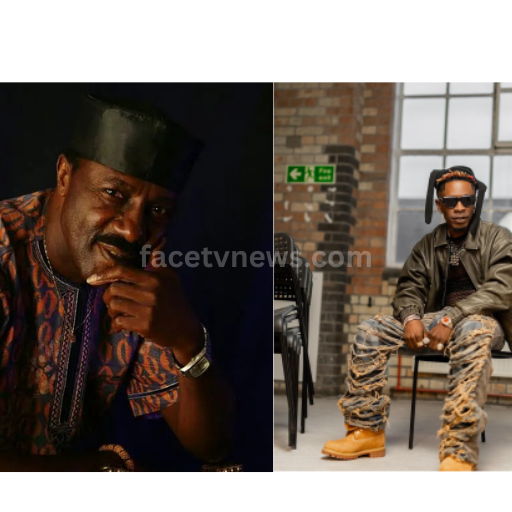
Gyedu-Blay Ambolley has sparked fresh debate in Ghana’s music industry after openly challenging Shatta Wale over his long-standing “Dancehall King” title.
Speaking during a recent interview, the veteran highlife musician argued that Shatta Wale cannot be regarded as the “Dancehall King of Africa,” insisting that the genre itself did not originate from Ghana.
According to Ambolley, dancehall music has its roots in Jamaica, and therefore no African artist can claim ultimate ownership of the title.
“Shatta Wale is not the Dancehall King in Africa because he didn’t create the dancehall genre. Dancehall originated in Jamaica. You can’t call yourself a king of something you didn’t create,” Ambolley stated.
The highlife legend went further to assert his own influence in Ghanaian music, claiming he played a foundational role in shaping rap music in the country.
“I can boldly say I am the king of rap in Africa because I added rhythm to poetic words. I created my own style. I started rap in the 1970s, before Reggie Rockstone brought it in the 1990s,” he added.
Ambolley also criticized the new generation of artists, suggesting that many lack originality and a defined musical identity. He specifically mentioned Black Sherif, claiming that younger musicians are largely imitating existing styles rather than creating something unique.
The comments quickly gained traction online, generating mixed reactions among fans and industry observers. While some supported Ambolley’s views on originality and musical heritage, others defended modern artists and their evolving sound.
In response, Shatta Wale did not remain silent. The dancehall star reacted publicly, addressing the comments and defending both his brand and his contribution to the African music scene.
The exchange has reignited long-standing conversations about identity, originality, and recognition within Ghana’s music industry, particularly regarding genre ownership and artist branding.
As discussions continue, the debate highlights a broader generational divide between pioneers and contemporary artists shaping the future of Ghanaian music.